

Seven Cups That Changed History
A cup is the most common object in human history. Every culture that has ever existed has made one. And yet some cups survive not just the centuries but the collapse of entire civilizations — because someone, at some point, decided this one was worth keeping.
Here are seven of them. Each one is real. Each is in a museum. Each tells a story about who held it, and why.
1. The Oldest Cup We Know Of — Iran, ca. 3365 BCE
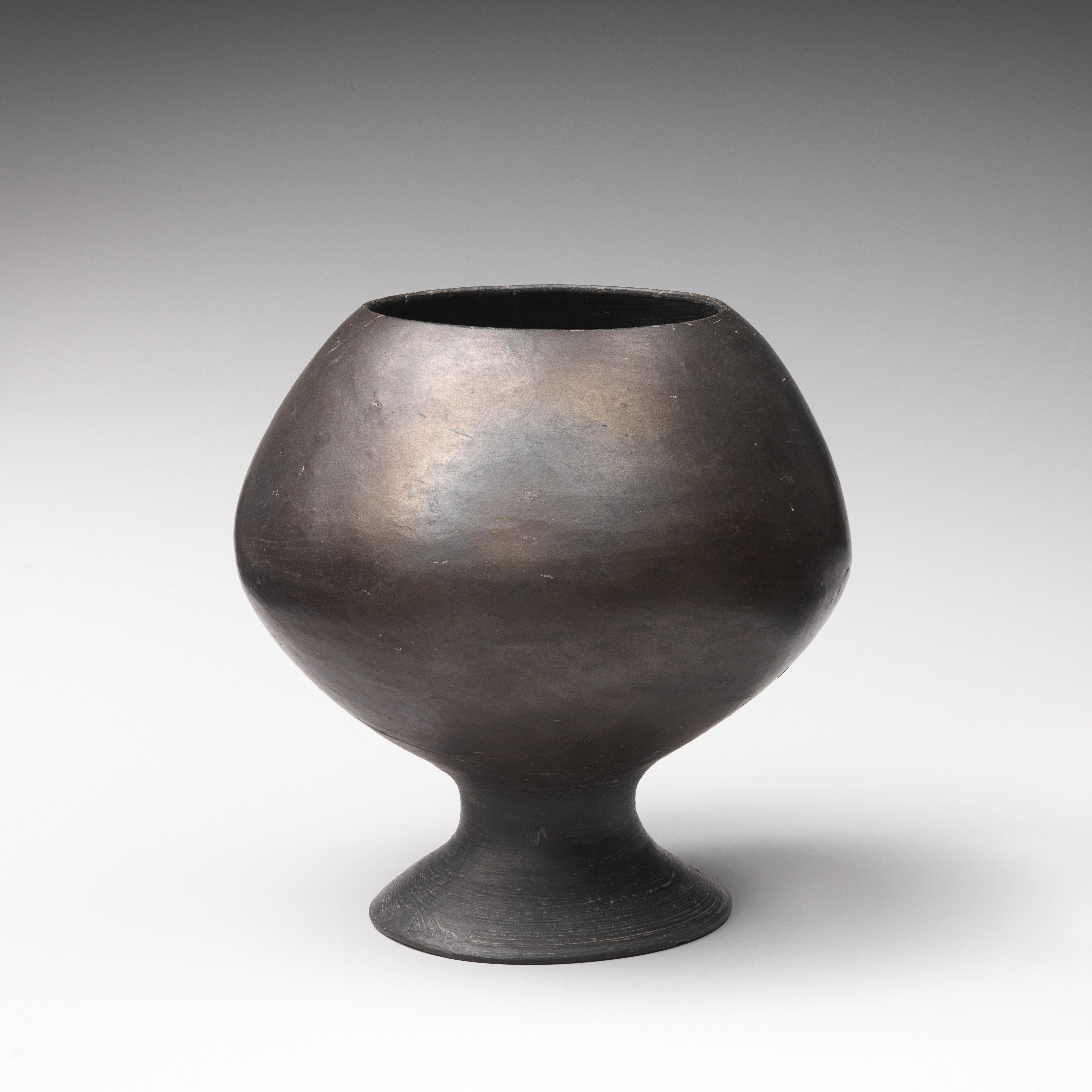
At Tepe Hissar, a Bronze Age site in northeastern Iran, archaeologists found something remarkable: almost every grave contained a cup. Not weapons. Not jewelry. A cup.
This ceramic goblet — now in the Metropolitan Museum of Art in New York, Acc. No. 39.60.3 — dates to approximately 3365 BCE, placing it among the oldest surviving drinking vessels in the world. Made roughly 5,400 years ago, before the pyramids, before the Parthenon, before the Roman Empire rose and fell.
What the grave-cups tell us is that the act of drinking was already, by that point, a ritual. Not just sustenance. Ceremony. The cup accompanied the dead because sharing a drink was already the most fundamental act of human community.
Metropolitan Museum of Art, New York. Gift of Museum of Tehran, 1939. Acc. No. 39.60.3. Public domain.
2. A Cup from the Court of Thutmose III — Egypt, ca. 1479–1425 BCE
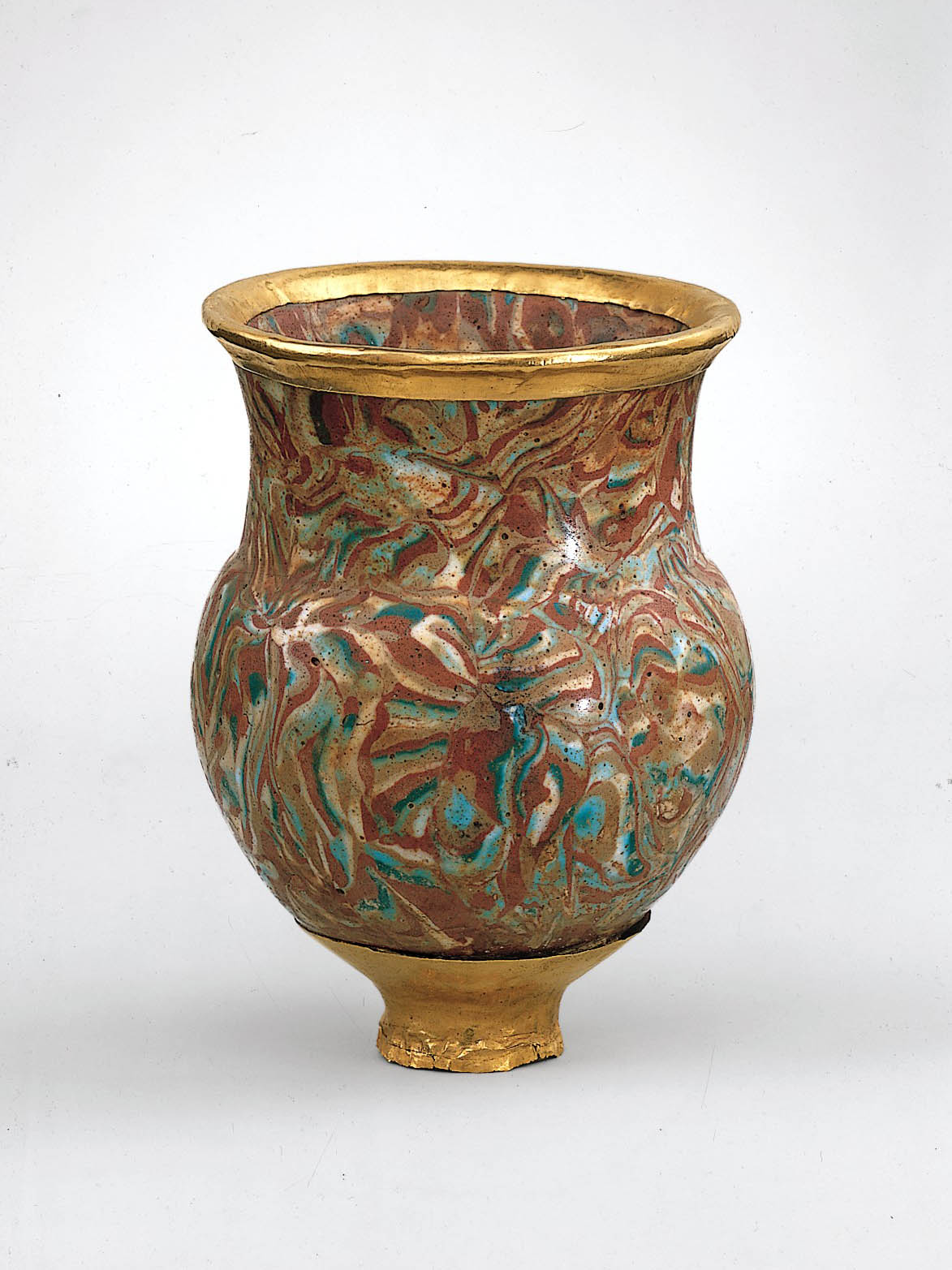
This small cup — glassy faience with a gold rim, 10 centimetres high — was not made in Egypt. It was brought there, possibly as part of a dowry, by one of the three foreign wives of Pharaoh Thutmose III. Found in their tomb in the Wadi Gabbanat el-Qurud, near Thebes.
Thutmose III built an empire stretching from Sudan to the Euphrates. Three foreign queens came to his court from what are now Syria, Mesopotamia, and Nubia. They brought objects with them. This cup was one. It crossed borders, survived a royal burial, and endured three thousand years underground before arriving at the Metropolitan Museum of Art.
Metropolitan Museum of Art, New York. Purchase, Edward S. Harkness Gift, 1926. Acc. No. 26.7.1175. Public domain.
3. The Symposium Cup — Greece, 4th Century BCE
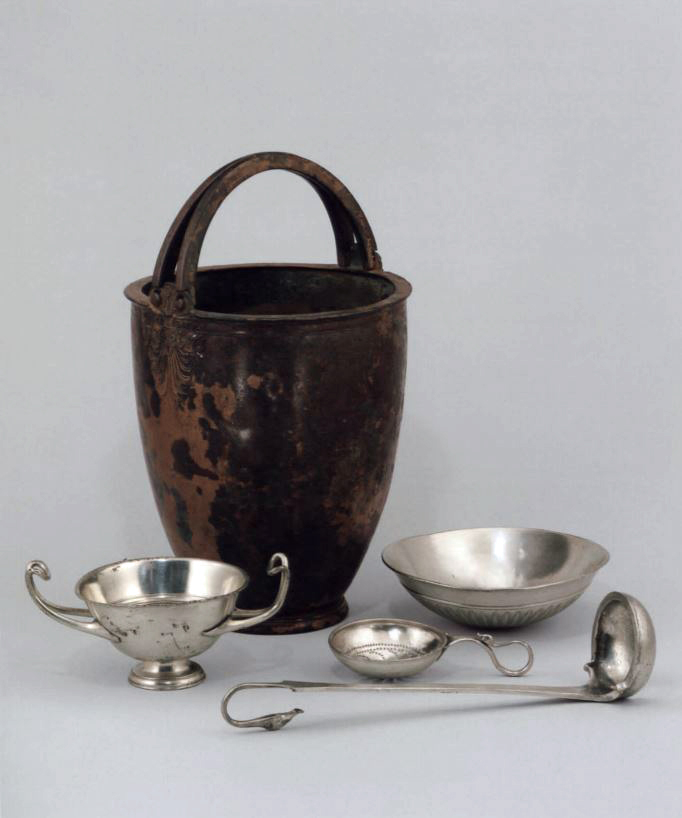
The Greeks had a specific word for the act of drinking together: symposion — drinking in common. It was among the most important institutions in Athenian civic life. Men gathered in the andron, reclined on couches, and passed shallow two-handled cups called kylikes around the room. The person holding the cup held the floor.
This silver kylix (Met, Acc. No. 1972.118.164) dates to the 4th century BCE — the era of Plato, Aristotle, and Demosthenes. The trial of Socrates was decided by citizens who had spent their evenings at symposia exactly like this, arguing about justice over wine in cups exactly like this. The connection between the drinking cup and the foundation of Western thought is not metaphorical. It is physical.
Metropolitan Museum of Art, New York. Bequest of Walter C. Baker, 1971. Acc. No. 1972.118.164. Public domain.
4. The Ruler's Chocolate Cup — Maya, 7th–8th Century
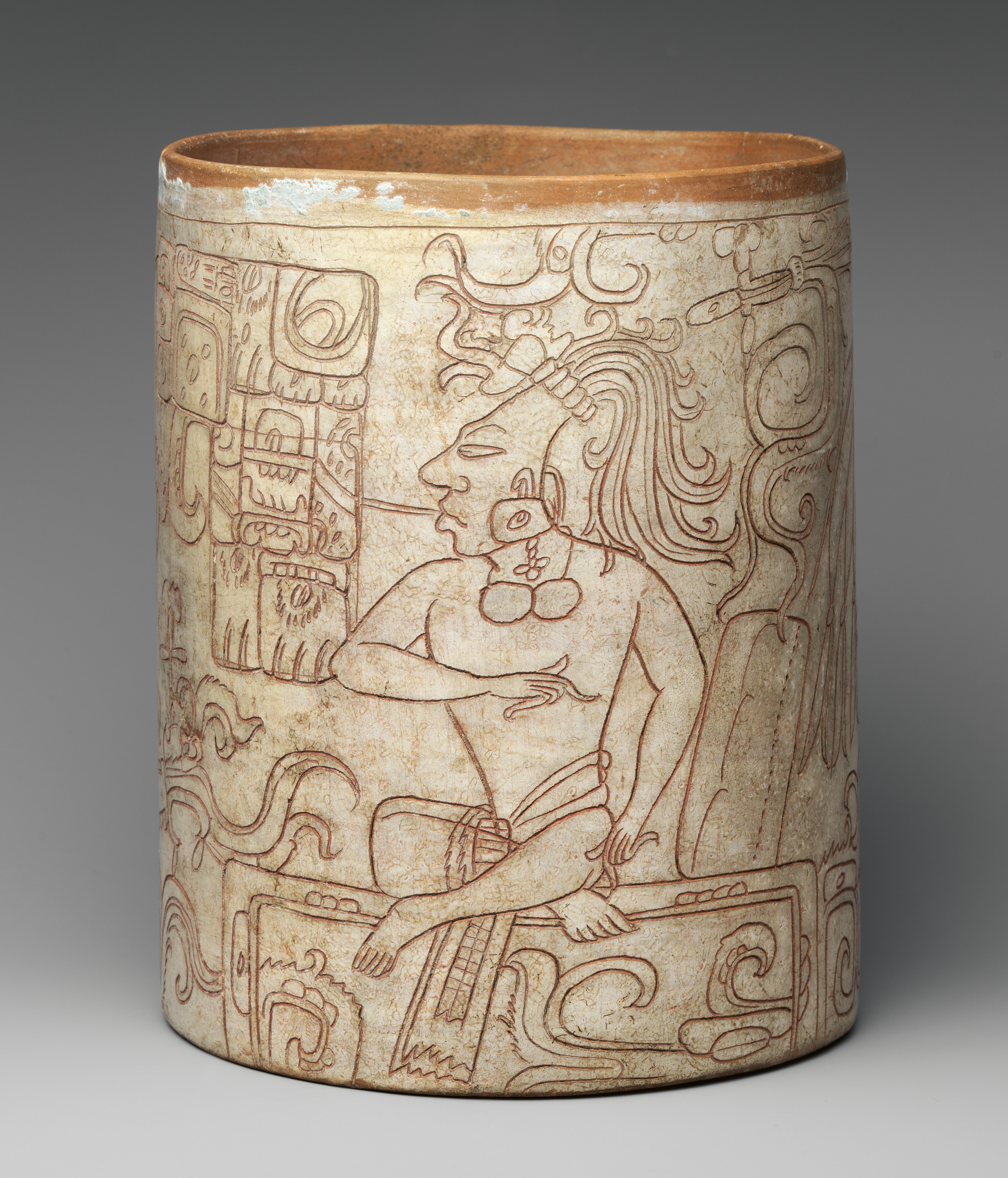
Around the rim of this Maya ceramic vessel — 24 centimetres tall, incised with a seated ruler and a supernatural deity — runs a hieroglyphic inscription that translates as: the drinking cup of B'aje Kaan Took', the ruler.
This is, in effect, the world's oldest personalized mug.
The vessel dates to the 7th or 8th century CE and was used for chocolate — a frothy cacao drink prepared by pouring liquid from height to create foam, the most prized part of the beverage. The ruler whose name it carries has been dead for over a thousand years. His cup, now at the Metropolitan Museum of Art (Acc. No. 1992.4), outlasted everything.
Metropolitan Museum of Art, New York. Purchase, Joseph Pulitzer Bequest, 1992. Acc. No. 1992.4. Public domain.
5. The Most Expensive Cup in the World — China, 1465–87
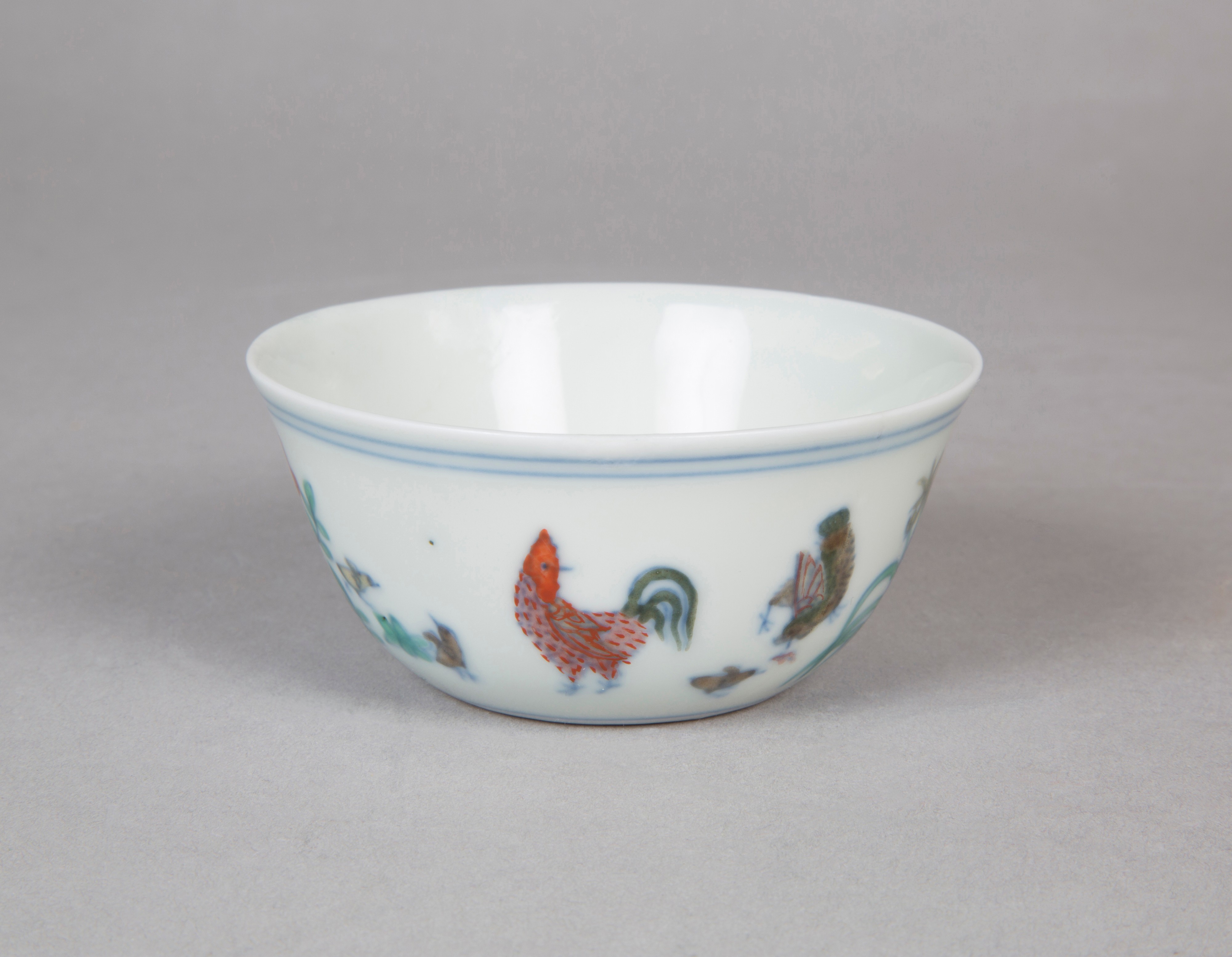
At Sotheby's Hong Kong, on April 8, 2014, a Chinese ceramic cup 4.1 centimetres high sold for HK$281 million — approximately USD $36 million. The buyer reportedly drank tea from it immediately after the auction.
It is a doucai chicken cup from the imperial kilns of Jingdezhen, reign of the Chenghua Emperor (1465–87). Doucai means contrasting colours: underglaze cobalt blue with overglaze enamel, a technique perfected for imperial use and never quite replicated since. The motif — a rooster, hens, and chicks — encodes a Confucian value: the nurturing of young life as the continuation of the family line. The cup is 4.1 centimetres high. Its price was $36 million. The Metropolitan Museum of Art holds one (Acc. No. 1987.85).
Metropolitan Museum of Art, New York. Purchase, Mrs. Richard E. Linburn Gift, 1987. Acc. No. 1987.85. Public domain.
6. The Tea Bowl That Changed How the World Drinks — Japan, early 17th century
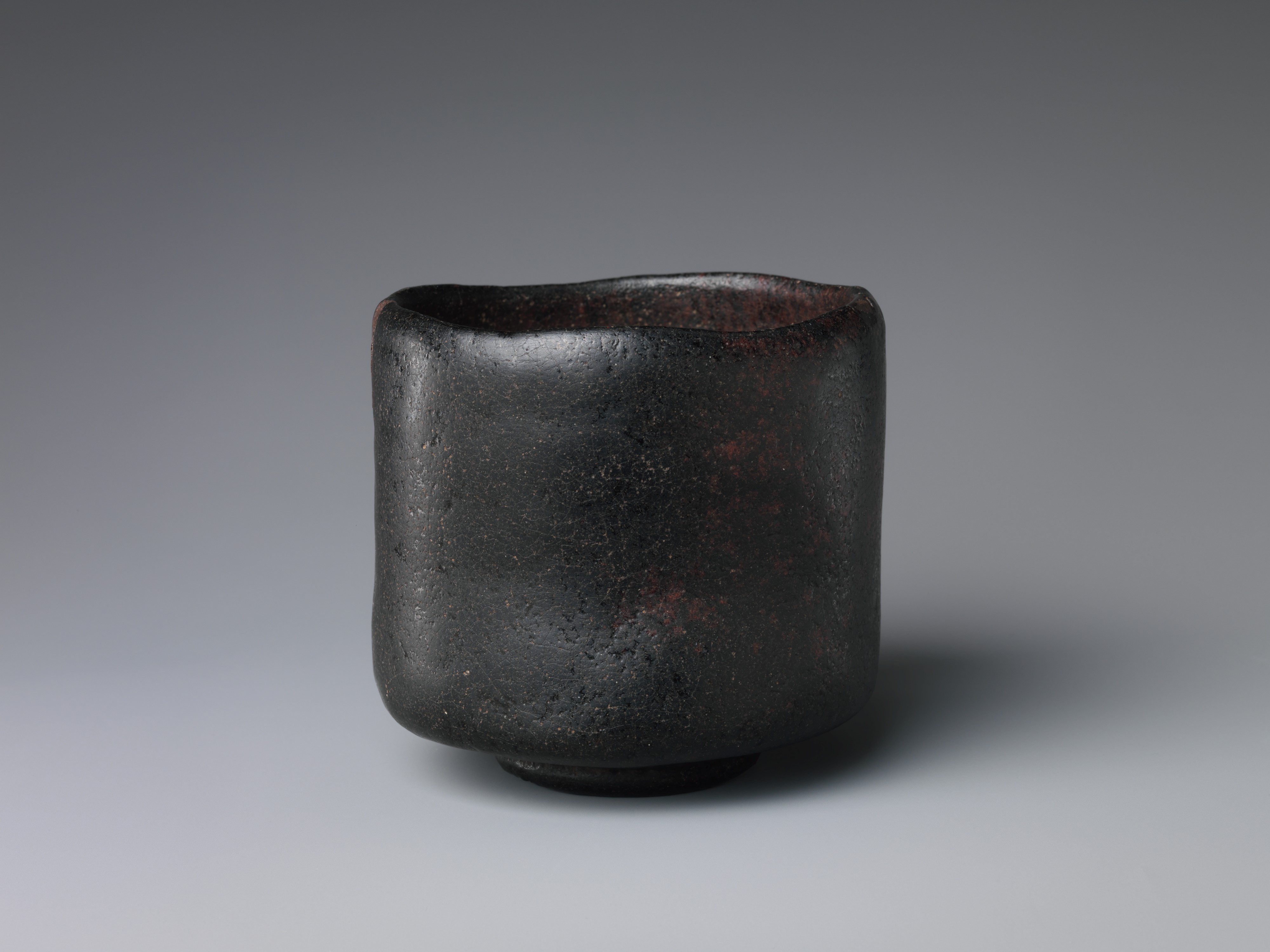
In the late 16th century, the tea master Sen no Rikyu codified the Japanese tea ceremony — chado, the way of tea — as a complete aesthetic philosophy. Against the prevailing taste for Chinese luxury wares, Rikyu championed wabi: the beauty of imperfection, asymmetry, and quiet. He was later ordered by his patron Toyotomi Hideyoshi to commit ritual suicide. His philosophy survived him.
The Raku tea bowl was its physical embodiment. Hand-shaped, not wheel-thrown. Black glaze, deliberately uneven. Slightly irregular at the rim. Small enough that both hands must cup it — because holding a Raku bowl is itself a practice, a moment of deliberate stillness before drinking. This example (Met, Acc. No. 17.118.74) weighs less than 400 grams. It changed how an entire civilization thought about the act of drinking.
Metropolitan Museum of Art, New York. Rogers Fund, 1917. Acc. No. 17.118.74. Public domain.
7. The President's Cup — America, ca. 1784

In 1786, George Washington ordered a Chinese porcelain service through the Society of the Cincinnati — 302 pieces, painted with the Cincinnati eagle, delivered to Mount Vernon. He used it throughout his presidency in New York and Philadelphia, serving diplomats, officers, and the architects of the new republic.
One coffee cup from that service is now in the Metropolitan Museum of Art (Acc. No. 39.18.3). Washington drank coffee. Which cup he held on which morning, history does not record. But one of them touched his lips. This may well have been the one.
Tazzarte has reproduced this cup faithfully — same form, same decoration, fine porcelain, 10 oz. Not as a souvenir. As a re-entry into the object's original life.
The Washington Cup at Tazzarte
Original: Coffee Cup, Chinese, ca. 1784. Porcelain. Metropolitan Museum of Art, New York, Acc. No. 39.18.3. Public domain.
What to read next
Cups made for one day of the year: A Tazzarte Christmas — vintage Christmas mugs from art history, from Giotto's Madonna of about 1310 to Bradley's poster of 1895.
If you want a curated gift shortlist: The Art Gift Guide: Objects Worth Giving (2026)
On giving objects that last: A Gift for Someone Who Has Everything
Every mug in the Tazzarte collection passes the same test: documented historical provenance, visual power at small scale, and the morning test — would this object improve a morning? Not impress. Improve. Selected by Dr. Walther Fuchs for the Tazzarte collection.