Tazzarte
Wassily Kandinsky: Concentric Rings, 1913 – Porcelain Art Mug
Wassily Kandinsky: Concentric Rings, 1913 – Porcelain Art Mug
Couldn't load pickup availability
- ✓ Free worldwide shipping
- ✓ 30-day returns
- ✓ Damaged? Free replacement, no return needed
- ✓ Printed and shipped from the hub nearest you — no customs, no long wait
The price you see is the price you pay — taxes included, nothing added at checkout. Shipping · Returns · Help
Share
Concentric Rings, 1913
watercolour, 23.9 × 31.5 cm
Lenbachhaus und Kunstbau München, Gabriele Münter Stiftung 1957, GMS 446
A grid of squares, each holding a target of coloured rings in a different combination. It is not a finished painting but an investigation — a systematic test of how colours behave when placed next to one another — and it is simultaneously a scientific document and an object of remarkable visual intensity.
Wassily Kandinsky (1866–1944) made Farbstudie – Quadrate mit konzentrischen Ringen in 1913, at a moment of decisive transition. He had recently completed Über das Geistige in der Kunst, the text in which he argued that colour and form could act directly on the viewer's emotions without the mediation of representational subject matter. By 1913 he was already producing his first fully abstract compositions — the Improvisations and Compositions — and the colour studies of this period were the systematic groundwork for that leap. Each ring carries what Kandinsky believed was an intrinsic emotional charge; the relationships between them were as carefully considered as the intervals in a musical score. The work is held at the Städtische Galerie im Lenbachhaus in Munich.
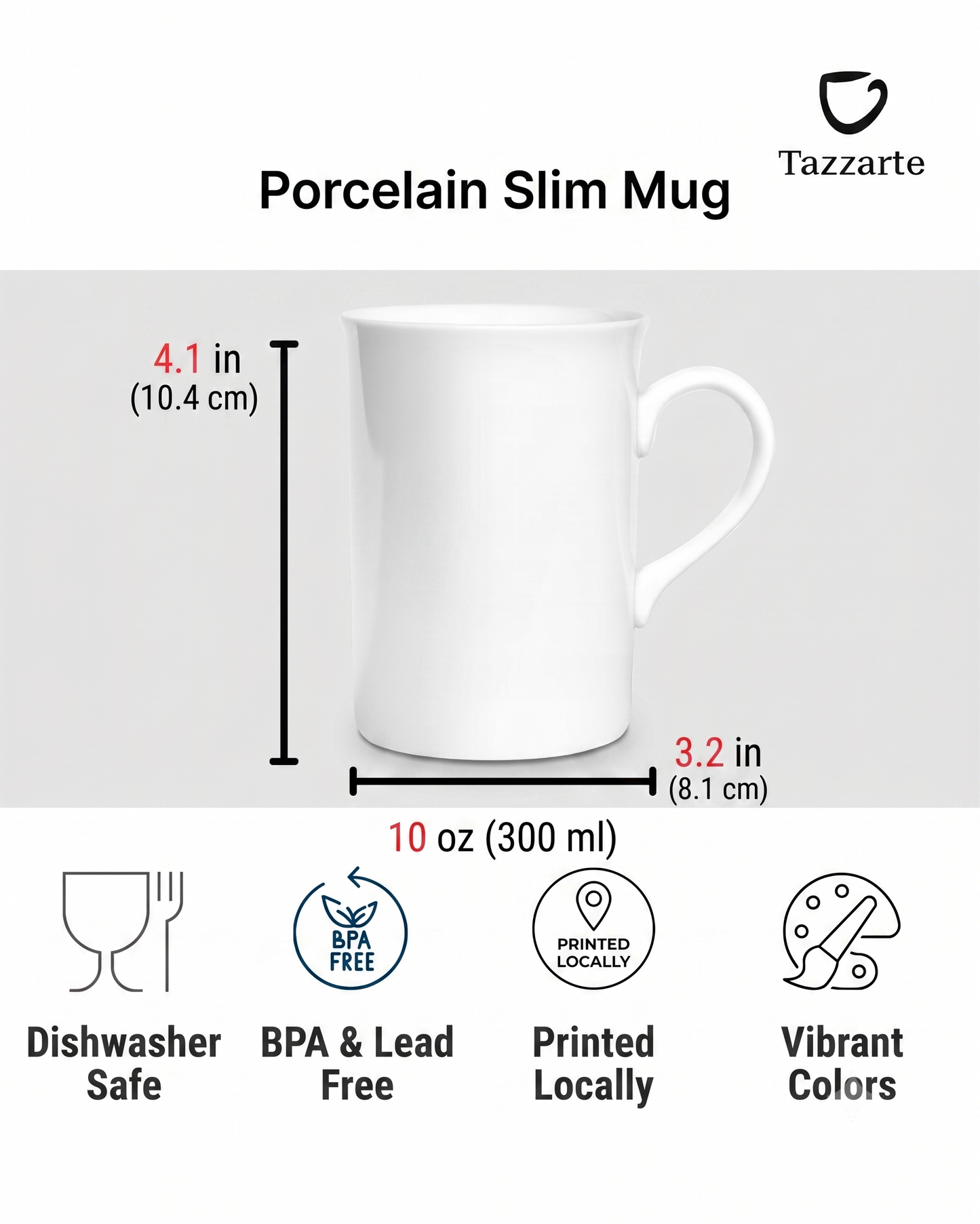
Fine porcelain, 10 oz — 104 mm high, 75 mm across the base. The image runs around the body; handle and rim stay white. Dishwasher and microwave safe.
From the same series: La flèche (The Arrow), 1943
Wassily Kandinsky, Farbstudie – Quadrate mit konzentrischen Ringen, 1913; watercolour, gouache and crayon, 23.9 × 31.5 cm. Städtische Galerie im Lenbachhaus und Kunstbau München, Gabriele Münter Stiftung 1957, GMS 446. Open-access image released by the museum under CC0 1.0.
Selected by Dr. Walther Fuchs for the Tazzarte collection.