Tazzarte
Eagle Quilt: Twenty-Six Stars, 1837 – Porcelain Art Mug
Eagle Quilt: Twenty-Six Stars, 1837 – Porcelain Art Mug
Couldn't load pickup availability
- ✓ Free worldwide shipping
- ✓ 30-day returns
- ✓ Damaged? Free replacement, no return needed
- ✓ Printed and shipped from the hub nearest you — no customs, no long wait
The price you see is the price you pay — taxes included, nothing added at checkout. Shipping · Returns · Help
Quilt, 103 × 97 in.
The Metropolitan Museum of Art, New York, acc, inv. 1974.32
America 250 · Jubilee Edition

The Eagle at Home: A New Nation Stitches Its Symbol
On 4 July 2026, America turned 250. In New England, sometime around 1837, an anonymous needleworker bent over cotton and thread and stitched an eagle — the eagle — at the centre of a quilt. She knew exactly what it meant.
The design follows the Great Seal of the United States, adopted by Congress in 1782: an eagle with wings spread, arrows in one talon, an olive branch in the other. Above the eagle's head: twenty-six stars. Twenty-six — because in January 1837, Michigan had just become the twenty-sixth state, and someone, somewhere, decided this quilt would mark the moment. Not with a ceremony, not with a monument. With cloth and a needle, at a kitchen table.
The eagle had moved fast through American domestic life after the Revolution. It appeared on silver, on porcelain, on furniture and uniforms. The Society of the Cincinnati — founded in 1783 by officers who had served under Washington — adopted the same eagle for their badge of honour. By 1837, the symbol was everywhere, but it hadn't yet become imperial. This quilt catches it while it was still personal: a grandmother's pride, a family's declaration. We are Americans. This is our bird.
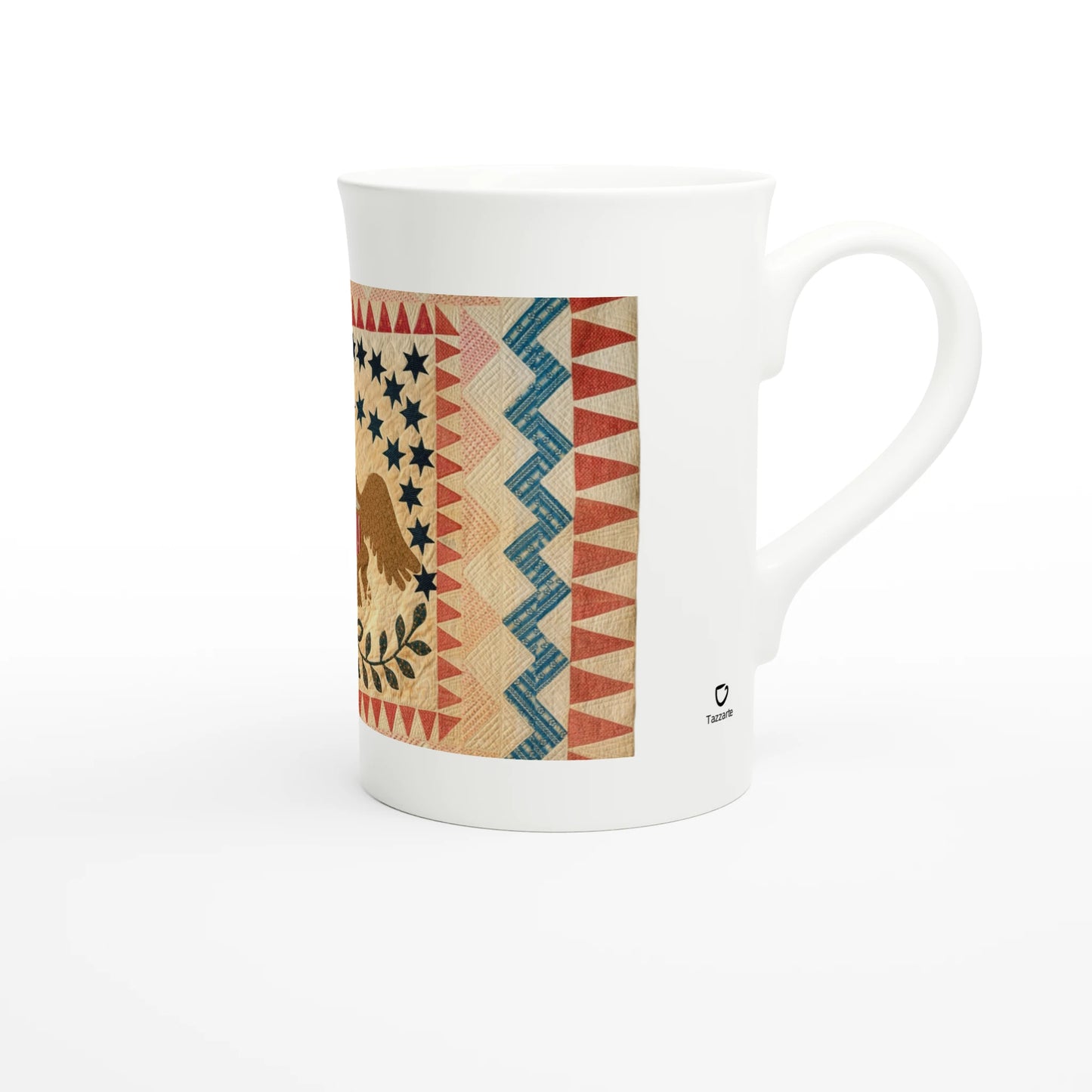
The mug carries the quilt's central eagle medallion. The full cotton textile — 103 by 97 inches, almost a perfect square — now hangs in the American Wing of the Metropolitan Museum of Art in New York.
Read the full story: The Quilt That Counted Michigan
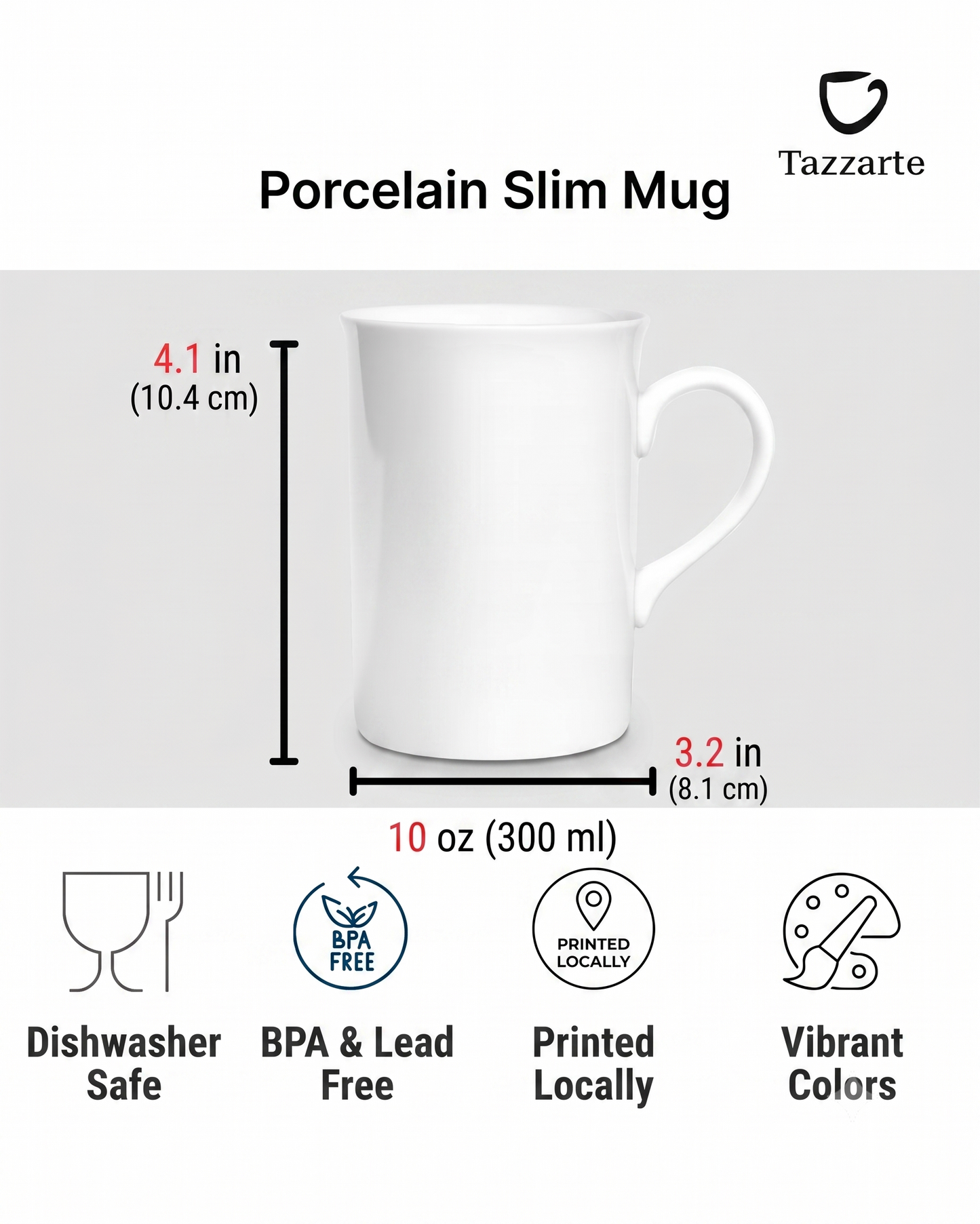
Fine porcelain, 10 oz — 104 mm high, 75 mm across the base. The image runs around the body; handle and rim stay white. Dishwasher and microwave safe.
Quilt, Eagle pattern, American, ca. 1837–50. Cotton, 103 × 97 in. (261.6 × 246.4 cm). Gift of Mrs. Jacob Kaplan, 1974. The Metropolitan Museum of Art, New York, acc. no. 1974.32. Public domain. View at the Met →
Selected by Dr. Walther Fuchs for the Tazzarte collection.